Clean Stainless Steel Appliances: Streak-Free in 5 Steps
Clean a stainless steel fridge or dishwasher without streaks using dish soap, microfiber and the grain, plus the cleaners that cause pitting and scratches.

Wipe the surface with a microfiber cloth dampened in warm water and a drop of dish soap, always moving in the direction of the grain. Follow with a second cloth dampened in plain water to remove soap, then buff dry with a clean, dry microfiber cloth. For a light sheen that resists fingerprints, finish with a few drops of mineral oil buffed in along the grain.
Stainless steel looks indestructible, but its brushed finish shows every fingerprint, drip and smear, and the wrong cleaner can leave a cloudy film or even permanent scratches. The good news is that the best method uses almost nothing: warm water, a little dish soap and the right cloth.
The single most important habit is wiping with the grain. Look closely at the door of your fridge or dishwasher and you will see fine parallel lines. Cleaning along those lines rather than in circles is what separates a streaky finish from a clean one.
Find the grain and check the finish
Most stainless appliances have a brushed finish with grain running either horizontally or vertically. Run a fingernail lightly across the surface; it feels smoother along the grain than against it. Every wipe in this guide should follow that direction.
Some newer appliances have a fingerprint-resistant or coated finish, and some are not stainless steel at all but a stainless-look coating. Check the manual: coated finishes are usually meant to be cleaned with soap and water only, and oils or polishes can leave them blotchy.
What you need
Skip the paper towels. They leave lint and tend to push streaks around rather than lift them.
- Two or three clean microfiber cloths
- A small bowl of warm water with 1–2 drops of dish soap
- A second bowl of plain warm water
- Optional: a teaspoon of mineral oil (food-grade) or a commercial stainless steel polish
- Optional: baking soda for stuck-on spots
Step-by-step: the everyday clean
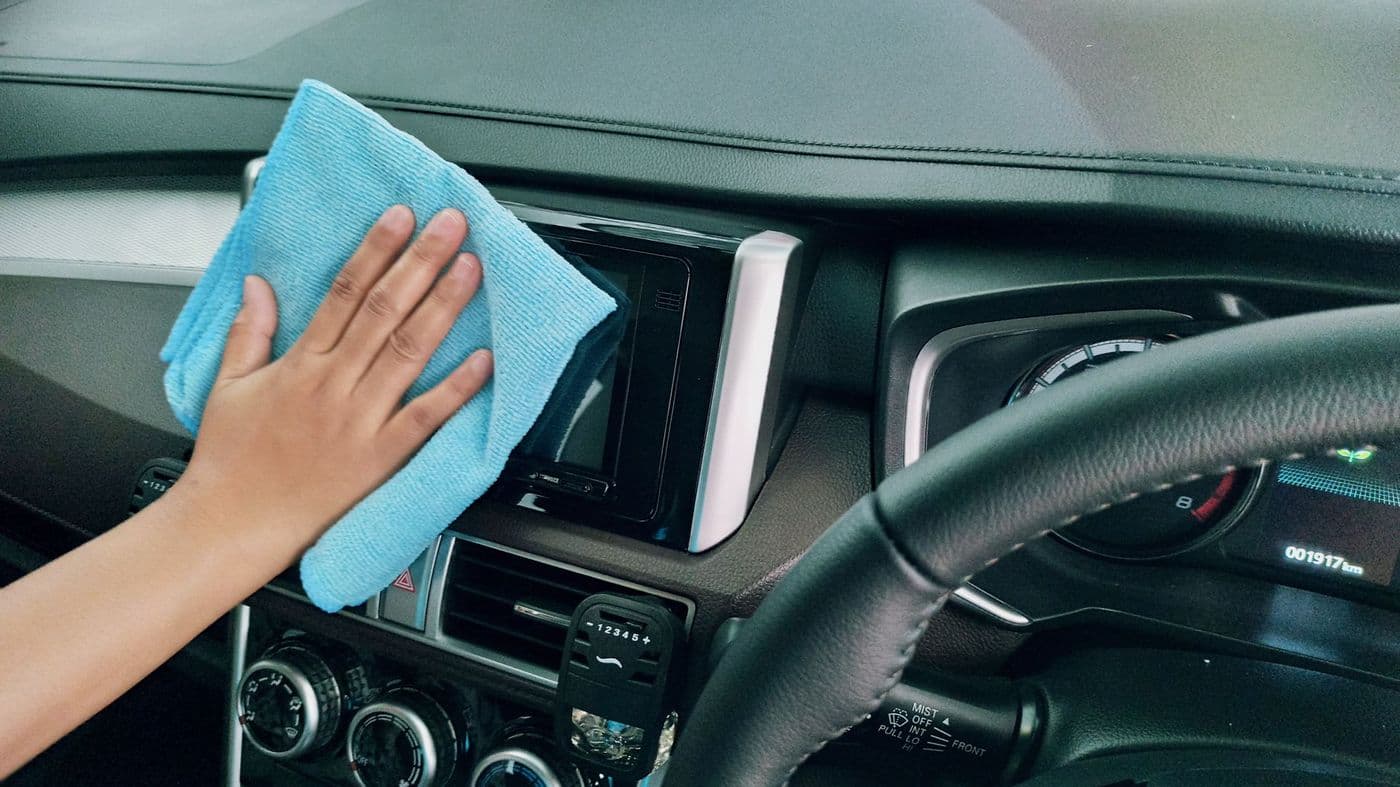
This takes about five minutes for a full-size fridge door and works on dishwashers, range hoods and oven fronts too.
- Dip a microfiber cloth in the soapy water and wring it out until it is just damp, not dripping.
- Wipe the whole surface in long, overlapping strokes along the grain, starting at the top and working down.
- Rinse with a second cloth dampened in plain water to remove any soap film, again following the grain.
- Buff immediately with a dry cloth before the water evaporates and leaves spots.
- Pay extra attention to handles and the area around them, where hands leave the most grease.
Tip: If you have hard water, use distilled water for the rinse step. It dries without leaving the mineral spots that tap water can.
Dealing with grease and stuck-on spots
Range hoods and oven fronts pick up a sticky film of cooking grease that plain water will not shift. Add a little more dish soap to the water and let the damp cloth sit on the area for a minute before wiping. Dish soap is designed to break down grease and is gentle on steel.
For dried food splatters, make a paste of baking soda and water, apply it with a soft cloth and rub gently with the grain. Rinse well, because baking soda left behind dries to a white haze. Only use this on uncoated stainless steel, and test a hidden spot first.
White vinegar diluted half and half with water can cut through water spots and light grease, but rinse it off afterwards and do not leave it sitting on the surface for long.
Optional: polish with oil for a fingerprint-resistant shine
Once the surface is clean and completely dry, put a few drops of mineral oil on a clean cloth and buff it into the steel along the grain. Use very little; the goal is a thin, invisible layer, not a slick surface. Then go over it with a dry part of the cloth to remove the excess.
This thin layer makes fingerprints less visible and easier to wipe away. Olive oil works in a pinch, but it can go sticky and attract dust over time, which is why mineral oil is the more common choice. Do not use oil on coated or fingerprint-resistant finishes.
What not to use on stainless steel
A few common products cause damage that cannot be wiped off later.
- Chlorine bleach and cleaners containing chlorides: they can cause pitting and discoloration on stainless steel.
- Steel wool, scouring pads and abrasive powders: they leave scratches that are especially visible against the grain.
- Glass cleaners containing ammonia on coated finishes: they can strip or cloud the coating.
- Oven cleaner on the outside of the appliance: it is far too harsh for exterior finishes.
- Mixing products: never combine bleach with vinegar or ammonia-based cleaners, as this releases toxic gases.
How often to clean
A quick wipe of handles and high-touch areas every couple of days keeps fingerprints under control. A full wash, rinse and buff once a week is plenty for most kitchens, with the range hood done whenever you notice a sticky film.
If you polish with oil, you only need to repeat it every few weeks. In between, a dry microfiber cloth buffed along the grain will usually remove fresh fingerprints on its own.
Frequently asked questions
Why does my stainless steel fridge look streaky after cleaning?
Streaks usually come from soap residue, hard water minerals or wiping in circles. Rinse with a cloth dampened in plain or distilled water, then buff dry along the grain with a clean microfiber cloth.
Can I use vinegar on stainless steel?
Diluted vinegar is fine for occasional use on uncoated stainless steel to remove water spots. Rinse and dry afterwards, and avoid it on coated finishes unless the manufacturer allows it.
Is WD-40 safe for stainless steel appliances?
It is sometimes suggested as a polish, but it is not designed for kitchen surfaces and has a strong smell. Mineral oil or a polish made for stainless steel is a better choice near food.
How do I remove scratches from stainless steel?
Light surface scuffs can sometimes be reduced with a non-abrasive stainless steel polish applied along the grain. Deep scratches need a dedicated scratch-repair kit or professional help; check the manufacturer's advice first, as some finishes cannot be refinished.
Advertisement
General information only. Check product labels and manufacturer instructions before you start.
Keep reading

Clean Greasy Kitchen Cabinets: 3 Methods by Finish
Cut sticky grease on wood, painted or laminate cabinets with dish soap, baking soda or diluted vinegar, matched to the finish so nothing is damaged.
Descale a Kettle With Vinegar or Citric Acid: Exact Amounts
Remove white limescale from an electric kettle with vinegar or citric acid: exact amounts, soak times, how to rinse out the taste and how often to repeat.
Clean a Garbage Disposal: Stop the Smell in 4 Safe Steps
Clean a smelly garbage disposal with ice, baking soda and vinegar, scrub the hidden splash guard, and learn what never to pour or grind down the drain.