Clean Greasy Kitchen Cabinets: 3 Methods by Finish
Cut sticky grease on wood, painted or laminate cabinets with dish soap, baking soda or diluted vinegar, matched to the finish so nothing is damaged.
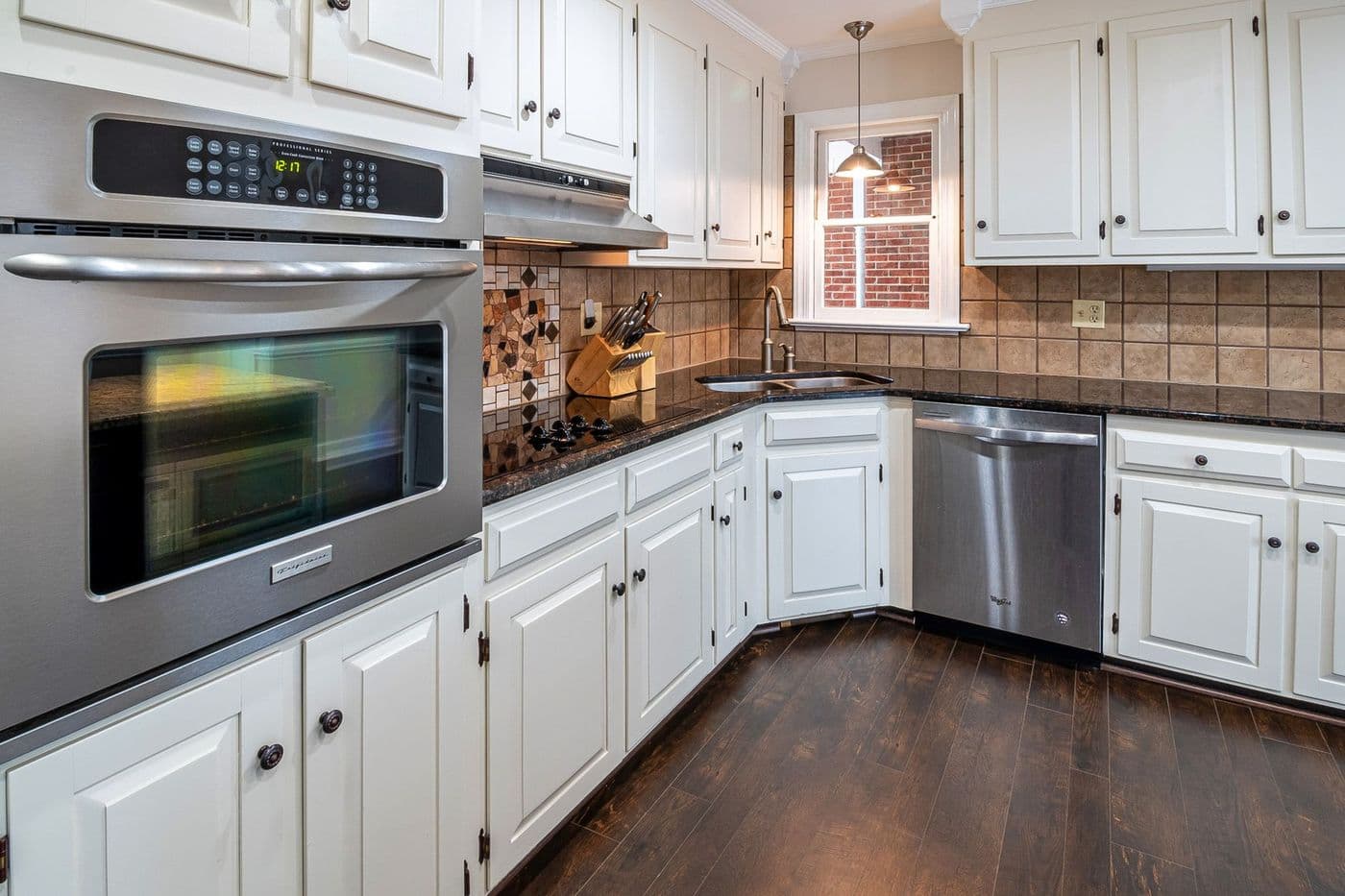
Mix 1 teaspoon of dish soap into 4 cups (1 liter) of warm water, wring out a soft cloth until it is just damp, and wipe the cabinet doors from top to bottom. For thick, sticky grease, rub a paste of baking soda and water on gently, then wipe it off. Always follow with a cloth dampened in clean water and dry the surface immediately, especially on wood.
Cabinets near the stove and the range hood collect a sticky, yellowish film made of cooking grease mixed with dust. Because it builds up slowly, most people do not notice it until the doors feel tacky to the touch.
The cleaning method is simple, but the finish matters. Wood, painted and laminate cabinets all tolerate warm soapy water, while stronger options like vinegar or baking soda need more care on some surfaces. Always test on the inside of a door first.
Identify your cabinet finish
Sealed wood cabinets (with a lacquer or varnish) handle mild soap and water well, but standing water can cause swelling or white marks. Painted cabinets can soften or lose sheen with harsh cleaners or heavy scrubbing. Laminate, thermofoil and melamine are the most forgiving, though very hot water and solvents can loosen edges.
If you are unsure, start with the gentlest method below and only move up if needed. Test anything new on the inside of a door or a hidden corner and let it dry before judging the result.
What you need
A basic kit covers nearly every cabinet type.
- Dish soap (a grease-cutting formula)
- A bucket or bowl of warm water
- Soft microfiber cloths, at least three
- Baking soda for stubborn spots
- Optional: white vinegar for laminate and sealed surfaces
- A soft toothbrush for hinges, handles and grooves
Method 1: Dish soap and warm water
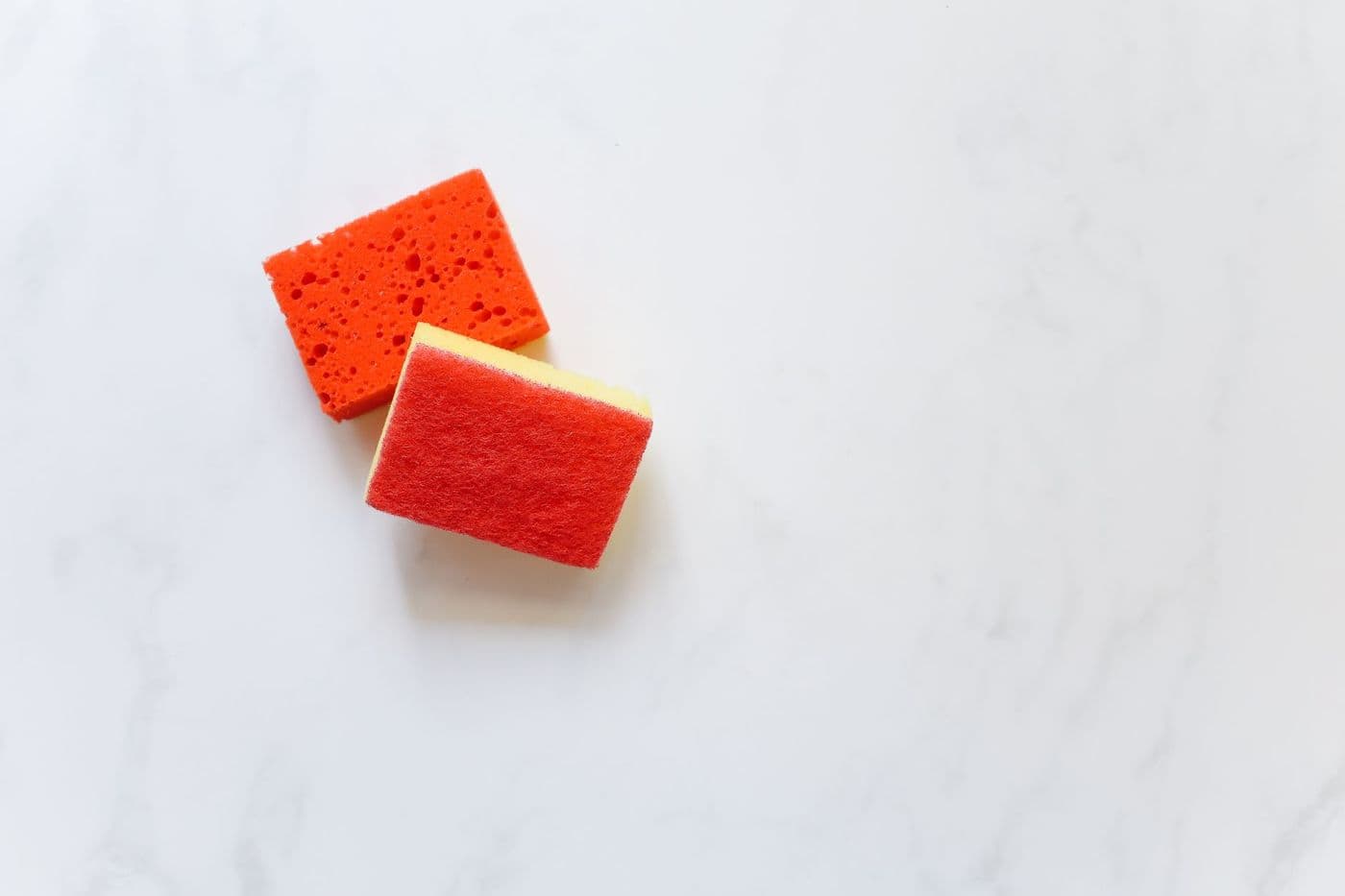
This is the right starting point for every finish. Stir about 1 teaspoon of dish soap into 4 cups (1 liter) of warm water. Dip a cloth, wring it out well and wipe each door and drawer front from top to bottom, so drips fall onto dirty areas rather than clean ones.
Let the damp cloth rest on sticky spots for a minute so the soap can soften the grease. Rinse the cloth often; once it is coated in grease, it just spreads the film around.
Finish each door with a cloth dampened in plain water to remove soap residue, then dry immediately with a clean cloth.
Method 2: Baking soda paste for stubborn grease
Mix 2 tablespoons of baking soda with 1 tablespoon of water into a paste. Apply it to the sticky area with a soft cloth or sponge and rub gently in small circles. Baking soda is a mild abrasive, so use light pressure, especially on painted or glossy surfaces.
Wipe away all of the paste with a damp cloth, rinse and dry. If any white haze remains, a second wipe with clean water removes it.
Tip: Use a soft toothbrush dipped in the soapy water to clean around hinges, handles and the grooves of shaker-style doors, where grease tends to collect.
Method 3: Diluted vinegar for laminate
On laminate and other non-porous surfaces, a solution of 1 part white vinegar to 1 part warm water, with a drop of dish soap added, cuts grease and leaves a streak-free finish. Spray it onto a cloth rather than directly onto the cabinet, wipe, then rinse and dry.
Avoid repeated vinegar use on natural wood or painted finishes. The acidity can dull some finishes over time. Never use vinegar on unsealed or oiled wood.
Do not combine vinegar with bleach in the same bucket or use them one after another on the same surface without rinsing in between; together they release chlorine gas.
Don't forget handles, tops and interiors
Cabinet handles collect both grease and hand grime. Wipe them with the soapy solution, using the toothbrush around the screws, and dry well to prevent corrosion on metal hardware.
The tops of upper cabinets are often the greasiest spot in the kitchen because airborne grease settles there. Clean them with the baking soda method, then line them with a sheet of wax paper or a cut-to-size liner that you can replace every few months.
Once a year, empty each cabinet, vacuum crumbs, wipe the shelves with the mild soapy solution and let them dry fully before putting things back.
How often to clean
Wipe the cabinets closest to the stove every week or two with a damp soapy cloth, and the rest of the kitchen once a month. Running the range hood fan while you cook, and for a few minutes afterwards, reduces how much grease reaches the cabinets in the first place.
A deep clean of handles, tops and interiors every three to six months keeps everything from reaching the sticky stage.
Frequently asked questions
What is the best homemade degreaser for kitchen cabinets?
Warm water with a small amount of grease-cutting dish soap is the safest all-round option. For heavier grease, a baking soda and water paste works well on most finishes when used gently.
Can I use vinegar on wood cabinets?
Occasional use of well-diluted vinegar on sealed wood is usually fine, but frequent use can dull some finishes. Dish soap and water is the gentler choice for wood.
How do I remove sticky residue from the top of kitchen cabinets?
Apply a baking soda paste, let it sit a few minutes, then wipe it off with a soapy cloth and rinse. Lining the tops with replaceable paper makes future cleaning much easier.
Will degreaser damage painted cabinets?
Strong commercial degreasers can soften or dull paint. Test on a hidden area, dilute according to the label, and rinse with clean water afterwards.
Advertisement
General information only. Check product labels and manufacturer instructions before you start.
Keep reading
Descale a Kettle With Vinegar or Citric Acid: Exact Amounts
Remove white limescale from an electric kettle with vinegar or citric acid: exact amounts, soak times, how to rinse out the taste and how often to repeat.
Clean a Garbage Disposal: Stop the Smell in 4 Safe Steps
Clean a smelly garbage disposal with ice, baking soda and vinegar, scrub the hidden splash guard, and learn what never to pour or grind down the drain.
Clean a Microwave With Lemon in 10 Minutes (No Scrubbing)
Steam a dirty microwave clean with one lemon and a cup of water: exact timings, the superheating safety step, the turntable and getting rid of smells.