Clean a Microwave With Lemon in 10 Minutes (No Scrubbing)
Steam a dirty microwave clean with one lemon and a cup of water: exact timings, the superheating safety step, the turntable and getting rid of smells.
Halve a lemon, squeeze the juice into a microwave-safe bowl with about 1 cup (240 ml) of water, drop the lemon halves in, and add a wooden spoon or chopstick. Heat on high for 3–5 minutes until the window steams up, then leave the door closed for 5 more minutes. Carefully remove the bowl, take out the turntable, and wipe the softened splatters away with a damp cloth.
A microwave gets dirty fast because food splatters, then gets reheated over and over until it is baked on. Scrubbing that dried-on layer is slow and can scratch the interior. Steam does the hard work instead: a few minutes of boiling lemon water softens everything so it wipes off with very little effort.
Lemon is not doing magic here. The steam is what loosens the mess, while the lemon helps cut light grease and leaves a fresher smell than plain water. You can use the same method with diluted white vinegar if you have no lemons.
What you need
Everything for this method fits in one hand.
- 1 lemon (or 2 tablespoons of bottled lemon juice, or 2 tablespoons of white vinegar)
- About 1 cup (240 ml) of water
- A microwave-safe glass or ceramic bowl, large enough that the water will not boil over
- A wooden spoon, chopstick or wooden skewer
- A soft sponge or microfiber cloth and an oven mitt
- Mild dish soap for the turntable
Step 1: Prepare the lemon water
Cut the lemon in half and squeeze the juice into the bowl, then add the water and drop in both halves. Stand a wooden spoon or chopstick in the bowl.
The wooden object matters. Plain water heated in a very smooth container can occasionally become superheated, meaning it gets hotter than its normal boiling point without bubbling, then erupts when disturbed. Something wooden in the water gives bubbles a place to form so it boils normally.
Tip: Never run the microwave empty, and do not use metal bowls or bowls with metallic trim.
Step 2: Heat, then let it steam
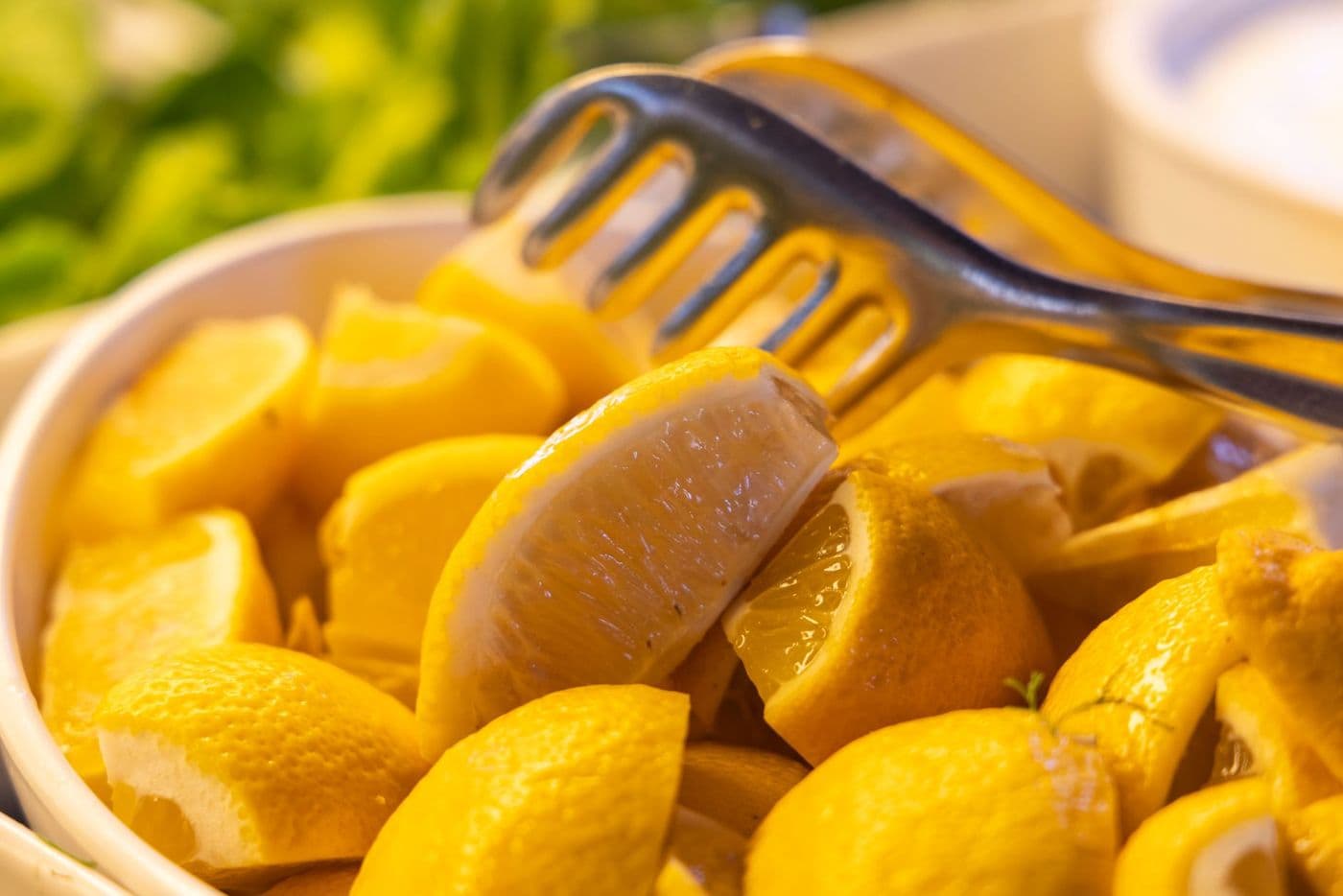
Put the bowl in the center of the turntable and heat on full power for 3 minutes. If the window is not fogged and the water is not boiling, add another 1–2 minutes. Larger or very dirty microwaves benefit from the longer time.
When the timer ends, do not open the door. Leave it closed for at least 5 minutes so the steam can keep working on the walls and ceiling. This resting time is where most of the softening happens.
Step 3: Remove the bowl and turntable carefully
Open the door and use an oven mitt to lift the bowl out; it will be very hot, and so will the steam that escapes. Set it on a heat-safe surface.
Lift out the glass turntable and the roller ring underneath. Wash the turntable in warm soapy water in the sink, or put it in the dishwasher if the manual says it is dishwasher-safe. Let a hot turntable cool a little before putting it in cold water, as sudden temperature changes can crack glass.
Step 4: Wipe the interior
Dip a sponge or cloth in the warm lemon water and wipe the ceiling first, then the walls, then the floor of the microwave. Starting high means drips land on areas you have not cleaned yet.
Most splatters should lift with one pass. For stubborn spots, dampen the cloth again and hold it on the spot for 30 seconds before wiping. Do not forget the inside of the door, the door seal and the edge where the door meets the frame, as grease collects there.
Avoid soaking the vents or pushing water into openings on the interior walls. A damp, well-wrung cloth is all you need.
If spots are still stuck
Repeat the steam cycle once more; a second round is usually enough even for neglected microwaves. If a few marks remain, make a paste of baking soda and a little water, rub it on gently with a soft sponge, then wipe away all residue with a clean damp cloth.
Avoid steel wool, scouring powder and oven cleaner inside the microwave. They can damage the interior coating, and damaged coatings are harder to clean in future.
Clean the outside and keep it clean
Wipe the exterior and handle with a cloth dampened in mild soapy water. For the control panel, spray cleaner onto the cloth, never directly onto the buttons, so liquid does not seep inside.
To keep the microwave cleaner between deep cleans, cover food with a microwave-safe lid or a paper towel while heating, and wipe fresh splatters as soon as the oven cools. A quick lemon steam once a week takes less than 10 minutes and stops buildup before it starts.
Frequently asked questions
How long should I microwave lemon water to clean it?
Usually 3–5 minutes on high, until the window steams up, followed by 5 minutes with the door closed. Very dirty microwaves may need a second cycle.
Can I use vinegar instead of lemon?
Yes. Mix about 2 tablespoons of white vinegar with 1 cup of water and follow the same steps. It works just as well but smells stronger while heating.
How do I get a burnt smell out of a microwave?
Clean the interior first, since food residue holds odors. Then leave a small bowl of baking soda inside with the door closed overnight, or repeat the lemon steam once more.
Is it safe to clean a microwave with steam?
Yes, as long as you use a microwave-safe bowl, add a wooden spoon to prevent superheating, never run it empty, and use an oven mitt to remove the hot bowl.
Advertisement
General information only. Check product labels and manufacturer instructions before you start.
Keep reading
Clean Greasy Kitchen Cabinets: 3 Methods by Finish
Cut sticky grease on wood, painted or laminate cabinets with dish soap, baking soda or diluted vinegar, matched to the finish so nothing is damaged.
Descale a Kettle With Vinegar or Citric Acid: Exact Amounts
Remove white limescale from an electric kettle with vinegar or citric acid: exact amounts, soak times, how to rinse out the taste and how often to repeat.
Clean a Garbage Disposal: Stop the Smell in 4 Safe Steps
Clean a smelly garbage disposal with ice, baking soda and vinegar, scrub the hidden splash guard, and learn what never to pour or grind down the drain.