Clean a Bathroom Exhaust Fan Safely in 20 Minutes
Clean a dusty, noisy bathroom exhaust fan step by step: cut the power, wash the cover, vacuum the blades and housing, then test the airflow with one sheet.

Switch off the fan at the circuit breaker, then pull down the cover and release its spring clips. Wash the cover in warm soapy water and let it dry. Vacuum the fan blades, motor area and housing with a brush attachment, wipe them with a barely damp cloth, and refit the dry cover before restoring power.
A bathroom exhaust fan pulls damp air out of the room, but it also pulls in dust and lint. Over time that dust coats the grille, blades and motor, so the fan moves less air, gets noisier and leaves more moisture behind. Less ventilation means more condensation, and more condensation means more mold.
Cleaning a fan takes about 20 minutes and no special tools. The main rule is to cut the power before you touch anything beyond the outside of the cover.
Safety first: cut the power
Turning the fan off at the wall switch is not enough when you will be reaching into the housing. Switch off the circuit breaker for the bathroom and check that the fan and light no longer turn on.
Use a stable step ladder, not a chair or the edge of a bathtub. If the fan is mounted high or you are not comfortable working overhead, ask someone to help or hold the ladder.
Tip: Put a towel over the sink and floor below the fan. Dust tends to fall in clumps once you remove the cover.
What you need
Most of this is already in a typical cleaning cupboard.
- A vacuum cleaner with a brush attachment and crevice tool
- Dish soap and a bowl or sink of warm water
- A soft brush or old toothbrush
- Microfiber cloths
- A step ladder
- A screwdriver, if your model's cover or motor is screwed in
Step 1: Remove and wash the cover
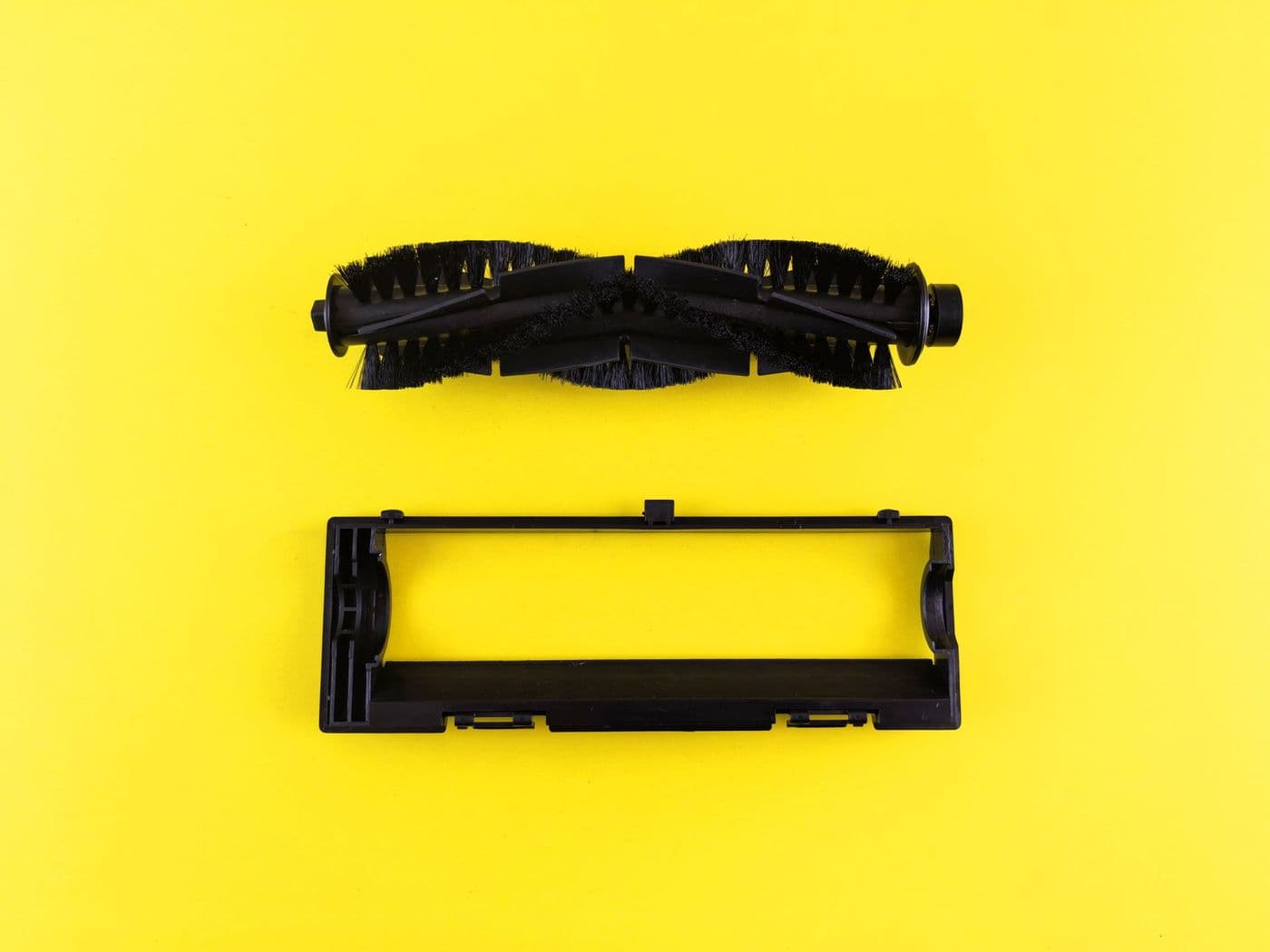
Gently pull the cover straight down. Most covers are held by two thin metal spring clips; squeeze them together to release the cover completely. Some models twist off or have a screw in the center instead.
Wash the cover in warm water with a little dish soap, using a soft brush to clean between the slats. For greasy or yellowed covers, let it soak for 15 minutes first. Rinse and let it dry completely. If the cover includes a light fixture or wiring, do not submerge it; wipe it with a damp cloth instead.
Step 2: Vacuum the fan and housing
With the power still off, vacuum the fan blades or wheel, the motor area and the inside of the metal housing using the brush attachment. Use the crevice tool for corners. Work gently so you do not bend blades or disturb wiring.
For dust stuck to the blades, wipe them with a microfiber cloth that is barely damp, never wet. Keep water away from the motor and any electrical parts.
Step 3: Deep clean (optional)
Many fans have a motor and blade assembly that unplugs inside the housing and can be removed with one or two screws. If your manual explains how, removing it lets you clean the blades thoroughly and reach the back of the housing and the damper flap.
Check that the damper, the flap where the fan connects to the duct, opens and closes freely. A stuck damper reduces airflow. If anything looks damaged, or you are unsure, leave the motor in place.
Step 4: Reassemble and test
Make sure the cover is completely dry, then squeeze the clips and push them back into their slots, pressing the cover up until it sits flush with the ceiling. Restore power at the breaker and switch the fan on.
A simple test: hold a single sheet of toilet paper near the grille. If the fan is working well, the paper should be drawn toward it. If not, the duct may be blocked or the fan may be undersized for the room, which is worth having an electrician or HVAC professional check.
How often to clean it
Vacuum the outside of the grille every month or two, which takes a minute and needs no tools. A full clean with the cover removed every six months to a year keeps most fans running well.
Clean more often if you notice dust on the grille, a louder hum, or mirrors that stay fogged longer than usual. Running the fan for 20–30 minutes after every shower helps it do its job.
Frequently asked questions
Can I clean a bathroom fan without turning off the power?
You can vacuum the outside of the grille with the fan switched off at the wall. For anything beyond that, including removing the cover and touching the blades, switch it off at the circuit breaker first.
Why is my bathroom fan so loud?
Dust buildup on the blades, a loose cover or a worn motor are common causes. Cleaning often helps; if the noise continues, the motor may need replacing.
How do I know if my bathroom fan is working?
Hold a sheet of toilet paper near the grille while it runs. It should be pulled toward the fan. If it is not, check for a blocked duct or stuck damper.
Can I put the fan cover in the dishwasher?
Some plastic covers can go on the top rack, but check the manufacturer's instructions. Never put a cover with a built-in light or wiring in water.
Advertisement
General information only. Check product labels and manufacturer instructions before you start.
Keep reading
Clean a Shower Head With Vinegar: No Tools, 6 Steps
Unclog a shower head and restore water pressure with a simple vinegar bag soak, plus how to clear blocked nozzles and protect brass or matte black finish.
Remove Black Mold From Shower Caulk: Poultice Method
Lift black mold from silicone caulk around a tub or shower with a bleach poultice, learn when caulk must be replaced, and stop the mold coming back.
Remove a Toilet Bowl Ring Without Scratching: 5 Steps
Get rid of the hard-water ring in a toilet bowl with vinegar, citric acid or a wet pumice stone, plus the toilet cleaner combinations you must never mix.