How to Remove Hard Water Stains From Shower Glass
Why shower glass goes cloudy, how to dissolve limescale and soap scum with vinegar or citric acid, and a 30-second habit to keep it clear.
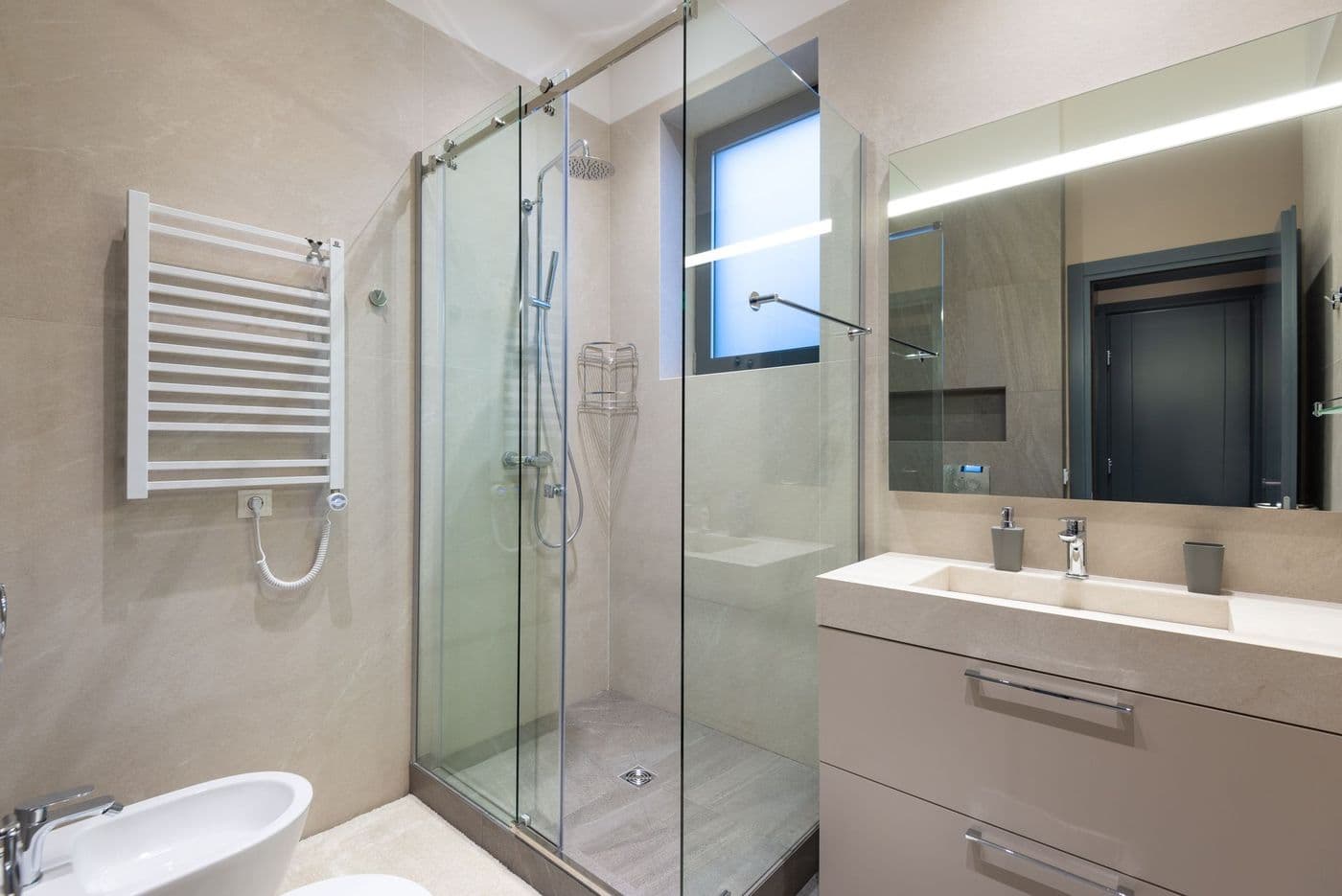
Spray the glass with warm white vinegar (or a citric acid solution), leave it for 10–15 minutes so the acid dissolves the mineral deposits, scrub gently with a non-scratch sponge, rinse and dry with a squeegee or microfibre cloth. For heavy build-up, repeat or cover the glass with vinegar-soaked paper towels for 30 minutes.
Those cloudy white patches on shower glass are mostly calcium and magnesium carbonate left behind when hard water evaporates, mixed with soap scum. They are alkaline mineral deposits, which is why acids dissolve them and ordinary soap does not.
Below is the routine for regular build-up, a stronger method for glass that has been neglected, and what to do about the frame and seals.
What you need
Choose one acid — vinegar or citric acid — rather than layering products.
- White vinegar (household 5% acidity) or citric acid powder (about 1 tablespoon per 500 ml warm water)
- A spray bottle
- Non-scratch sponge and a microfibre cloth
- Squeegee
- Paper towels or cling film for stubborn patches
Method for light to medium stains
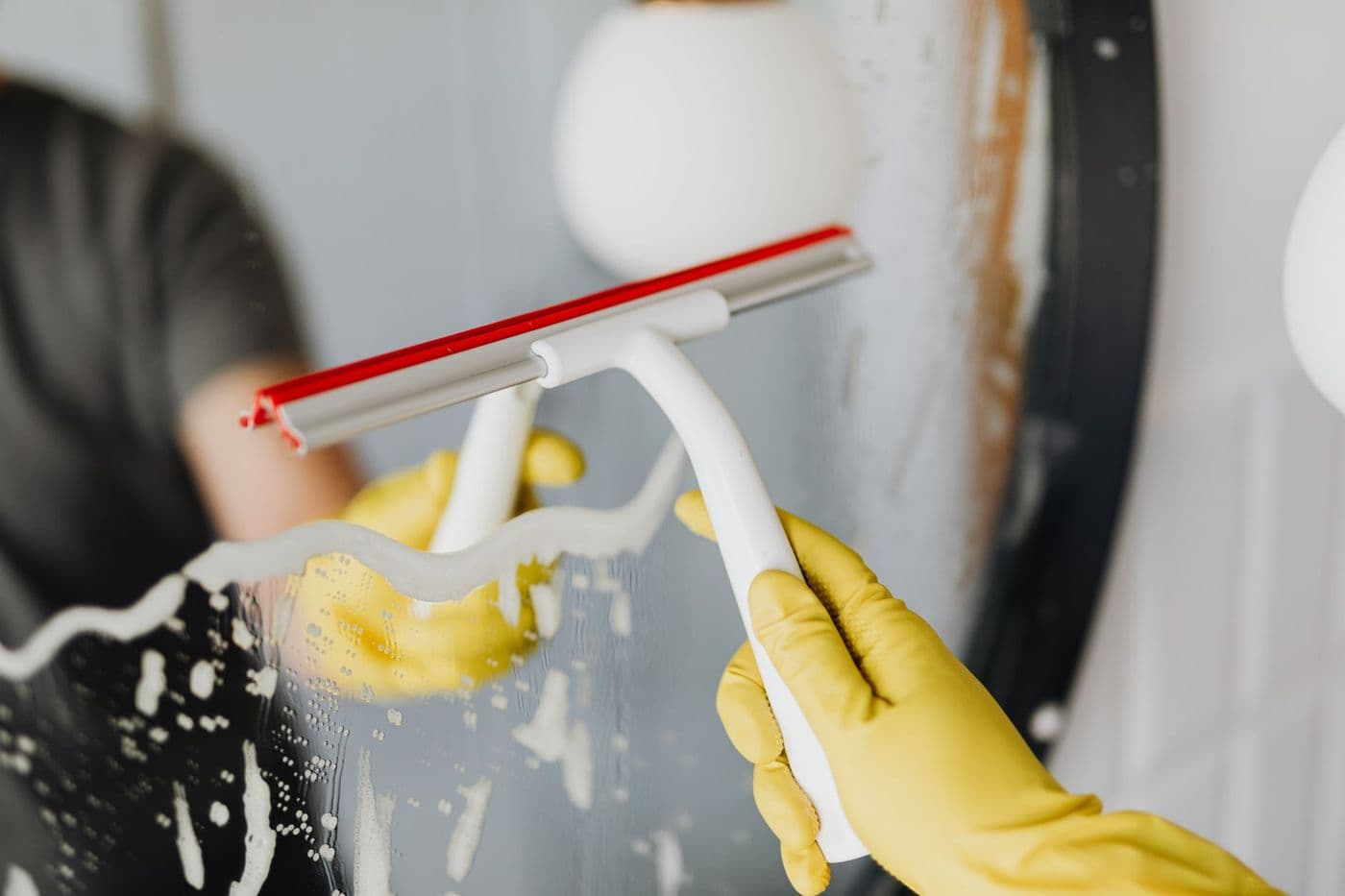
Warm acid works faster than cold, so heat the vinegar briefly (it should be warm, not hot) before filling the bottle.
- Rinse the glass with warm water to remove loose soap.
- Spray the vinegar or citric solution generously over the whole panel.
- Leave it for 10–15 minutes. Respray any areas that dry out.
- Scrub in small circles with the non-scratch sponge, paying attention to the lower third where splashes dry.
- Rinse thoroughly with clean water.
- Squeegee from top to bottom and buff dry with microfibre.
Method for heavy, long-term build-up
If the glass is still cloudy, the deposit is thicker than one application can dissolve. Soak paper towels in warm vinegar and press them flat against the glass, or spray and cover with cling film so the acid cannot evaporate. Leave for 30 minutes to an hour, then scrub and rinse.
A paste of baking soda and a little water used as a gentle scrub after the acid soak can help with gritty patches. Apply it after rinsing off the vinegar, not mixed with it — mixing them in a bottle just neutralises both.
Tip: If the glass stays hazy after several careful cleans, it may be etched rather than stained. Etching is permanent damage to the glass surface and no cleaner will remove it.
Protect the frame, seals and stone
Vinegar and citric acid are fine on glass and most chrome, but acids can damage natural stone such as marble, limestone and travertine, and can dull some metal finishes over time. Keep acid off stone shower trays and walls and rinse metal fittings promptly.
Check the care guide for coated glass: some enclosures have a factory water-repellent coating that should only be cleaned with mild products.
Keep it clear: the 30-second habit
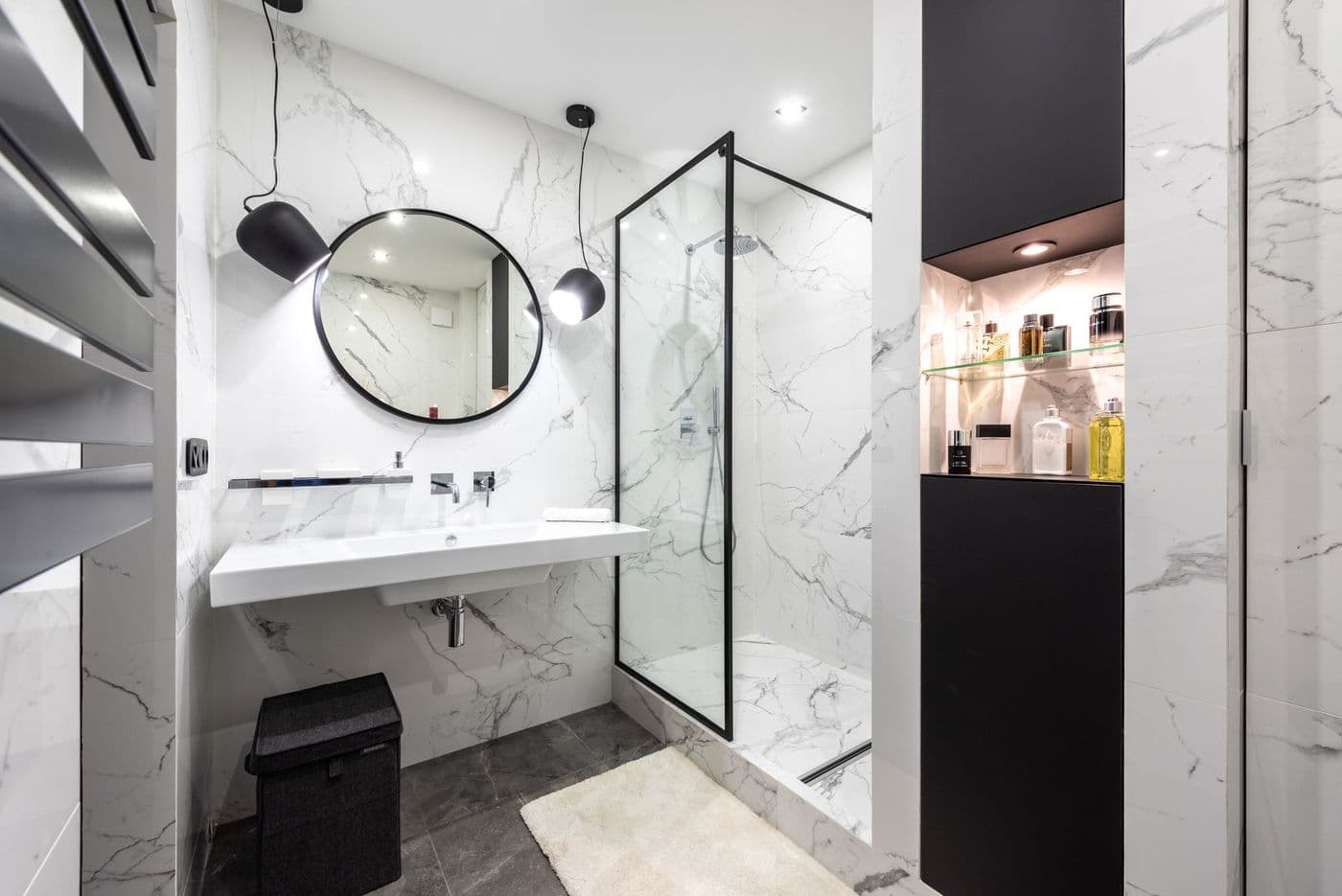
The most effective prevention is removing water before it dries. A quick squeegee after every shower takes about 30 seconds and leaves very little for minerals to form from.
Leaving the door or window open so the room dries faster also slows soap scum and mould. A weekly light spray with diluted vinegar keeps new deposits from bonding.
Frequently asked questions
Is vinegar safe on shower glass?
Yes, on plain glass. Avoid letting it sit on natural stone, and rinse chrome and metal trims after use. Check the manufacturer guidance for coated glass.
Can I use bleach on hard water stains?
Bleach does not dissolve mineral deposits, and it must never be mixed or used alongside vinegar because the combination releases toxic chlorine gas.
Why does my glass look cloudy even after cleaning?
Either the deposits are thick enough to need a longer soak, or the glass is etched. Etching cannot be cleaned off.
Does a squeegee really make a difference?
Yes. Hard water marks form when water evaporates and leaves minerals behind, so removing the water straight after showering prevents most of them.
Advertisement
General information only. Check product labels and manufacturer instructions before you start.
Keep reading
How to Clean a Mattress: Stains, Odours and a Twice-Yearly Refresh
Vacuum, deodorise and spot-clean a mattress safely: sweat and urine stains, smells, drying it properly and how a protector saves the work.
A Realistic Weekly Cleaning Schedule (15–30 Minutes a Day)
A simple day-by-day cleaning schedule that spreads the work across the week, plus daily habits, a monthly list and how to adapt it to your home.
How to Clean an Oven With Baking Soda and Vinegar (No Harsh Fumes)
A step-by-step method to clean a greasy oven with baking soda, water and vinegar: overnight paste, racks, glass door and what to avoid.